



Why Dental Implants Are a Long-Term Solution
Missing teeth change more than a smile; they alter the way you eat, speak, and feel in social situations. Dental implants stand out because they replace the entire tooth—both the visible crown and the root function within the jawbone. That root-level stability is what gives implants their natural feel and long lifespan. Rather than depending on neighboring teeth for support, as bridges do, or resting on the gums like dentures, implants integrate with your bone to become a fixed part of your bite. This stability improves chewing efficiency, protects your facial structure by preserving bone, and eliminates the day-to-day worry of movement or slippage.
For many people, the biggest shift after implants is confidence. Eating crisp apples or chewy foods becomes comfortable again, and speech clarity improves because the replacement tooth is anchored, not removable. Over time, that confidence carries into daily routines and social interactions, reducing the mental load that often follows tooth loss.
What Dental Implants Are and How They Work
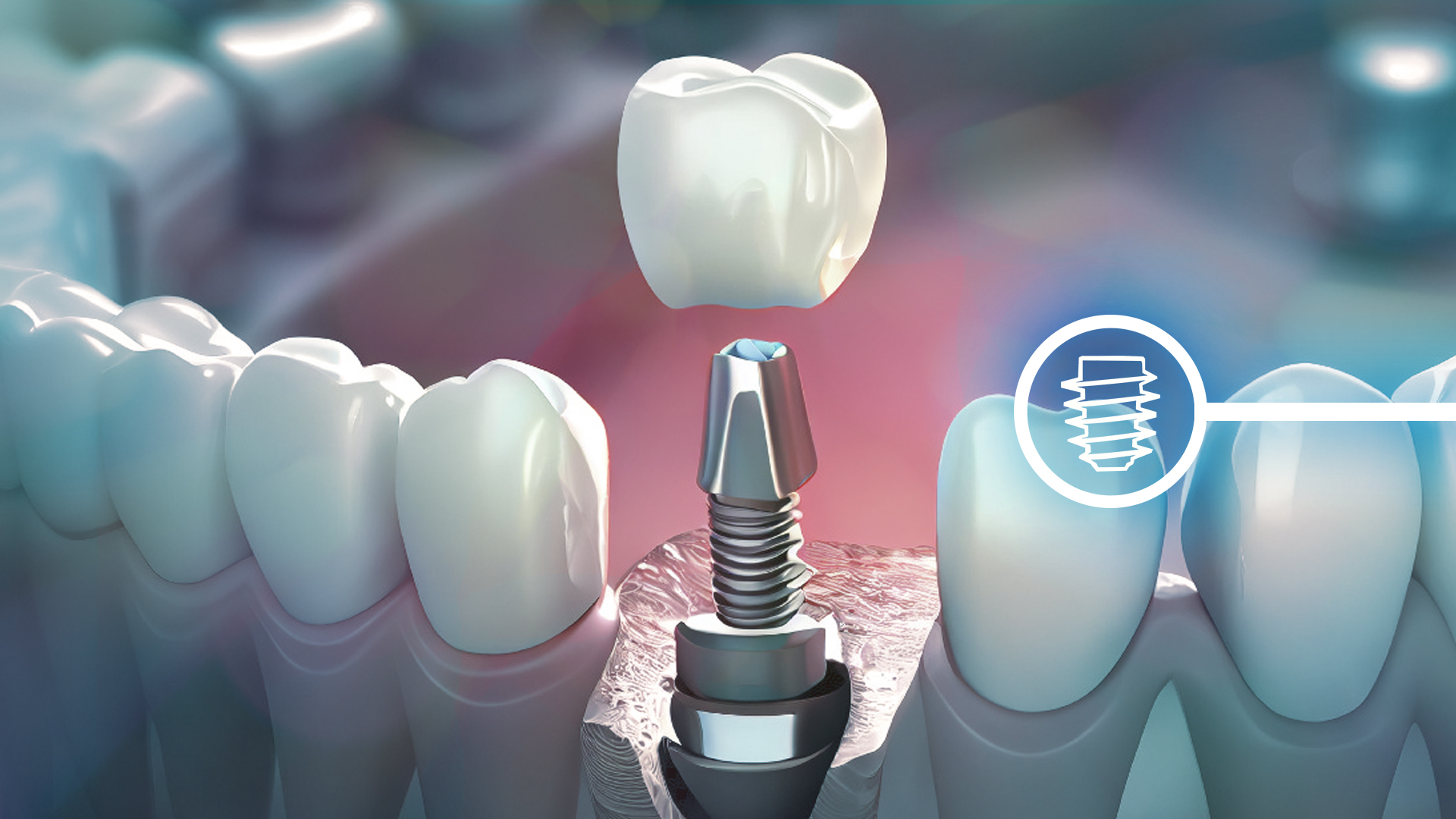
A dental implant has three parts. The implant post is a biocompatible titanium fixture placed in the jaw where the original tooth root once sat. After healing, the abutment connects to this post and serves as a stable base for the new tooth. The visible part is the crown, a custom-made restoration designed to match the shape, size, and shade of your natural teeth. The key to the system is a biological process called osseointegration, during which your bone bonds to the titanium surface. When osseointegration is complete, the post behaves like a natural root, providing the foundation for a lifelike, durable tooth.
This root-replacement approach does more than restore appearance. Natural roots stimulate the jawbone whenever you bite and chew. When a root is lost, that stimulation drops, and the bone can gradually shrink. Because implants restore that stimulus, they help maintain bone volume and the natural contours of your face, preventing the “sunken” look that sometimes follows prolonged tooth loss.
Step-by-Step Dental Implant Process
The journey begins with a comprehensive consultation. Your dentist reviews medical history, examines your gums and bite, and orders imaging—often a 3D CBCT scan—to map your bone structure and nerve positions. This planning step determines whether the bone is ready for implantation or whether supportive procedures, such as bone grafting or a sinus lift, will improve long-term stability. A clear plan also sets expectations about the timeline and the look of the final result.
On the day of surgery, local anesthesia keeps you comfortable while the implant post is gently placed into the jaw at a precise angle and depth. Many patients are surprised by how manageable the experience is and how quickly they return to normal routines. After placement, the body does its work. Over the next few months, bone cells fuse to the implant surface, creating the strong foundation implants are known for. During this time, a temporary restoration may be placed so your smile looks complete and your bite remains functional.
When your dentist confirms that osseointegration is stable, the abutment is connected to the post. An impression or digital scan guides the creation of a custom crown that matches neighboring teeth in color and shape. The final appointment is often the most satisfying: the crown is attached, your bite is fine-tuned, and you leave with a tooth that looks and feels natural.
How Much Do Dental Implants Cost?
Implant pricing varies because each mouth is different. The total is influenced by the number of teeth replaced, the quality and volume of bone at the site, the need for supportive procedures, the material and design of the crown, and the technology used for planning and placement. As a general range in India, a single-tooth implant often starts around ₹25,000 and can extend to ₹50,000 or more depending on components and complexity. Replacing multiple missing teeth may fall between ₹50,000 and ₹2,00,000, especially when several implants and linked restorations are involved. For a full-arch rehabilitation using protocols such as “All-on-X,” comprehensive packages commonly range from ₹3,00,000 to ₹6,00,000 and up, reflecting the surgical planning, number of implants, provisional and final prostheses, and follow-up care.
While the initial outlay is higher than a removable denture or a traditional bridge, implants frequently win on long-term value. Bridges may require altering healthy neighboring teeth and will eventually need replacement. Removable dentures can loosen as bone changes, leading to relines, adhesives, and dietary compromises. By preserving bone and functioning like a natural tooth, an implant can provide decades of service with routine maintenance, which is why many patients describe the investment as both functional and life-enhancing.
Note: Exact fees depend on your individual diagnosis and the materials and techniques selected. A personalized consultation is the best way to understand your precise treatment plan and total cost.
Key Benefits You’ll Notice Day to Day
The most immediate benefit patients report is a return to effortless chewing. Foods that were once avoided—crusty breads, crisp fruits, and mixed textures—become enjoyable again. Because implants are fixed and don’t shift, speech sounds remain clear, and there is no need to manage adhesives or remove anything at night. Aesthetic improvements are equally significant. The crown is designed to harmonize with your smile, and because the implant stimulates bone, your facial contours remain supported over time. There is also a protective benefit: implants do not rely on adjacent teeth for support, so healthy enamel is preserved instead of being reshaped to hold a bridge.
Confidence is difficult to quantify, but it often becomes the most valuable outcome. Knowing that your tooth is secure—at work, at social events, or in photographs—reduces daily stress and lets you focus on the moment rather than on your smile.
Recovery, Healing Timeline & Aftercare
Most people resume light activities within a day of implant placement. Mild swelling or tenderness is normal and typically subsides within a few days. Your dentist will provide guidance on diet, usually encouraging softer foods initially and a gradual return to your regular menu. Good oral hygiene is essential. Meticulous brushing and careful cleaning around the implant support healthy gums, and professional checkups allow your dentist to monitor the integration and the fit of your restoration.
Long-term success depends on habits. Smoking significantly reduces blood flow to the gums and can impede healing, while clenching or grinding may require a custom nightguard to protect your new tooth. With routine care—regular examinations, professional dental cleanings, and home hygiene—implants enjoy success rates among the highest in dentistry and can last for decades.
How to Choose the Right Dentist and Clinic
Outcomes improve when experience and planning come together. When evaluating a clinic, consider whether advanced imaging such as CBCT is used for precise surgical planning, whether guided surgery is available for complex cases, and how the team approaches staged treatment when bone grafting or sinus augmentation is needed. Ask to see examples of previous implant cases similar to yours, and discuss timelines so you understand each step from placement to final crown. Communication matters as much as technology; a dentist who explains options clearly and aligns treatment with your goals will help you feel confident throughout the process.
It is also wise to discuss the maintenance plan before treatment starts. Understanding how often reviews will occur, what to expect during the healing phase, and how emergency concerns are handled will make your journey smoother and more predictable.
Conclusion
Dental implant treatment restores more than a missing tooth—it restores comfort, function, and confidence. By replacing roots as well as crowns, implants protect bone, stabilize your bite, and give you a smile that feels natural in everyday life. If you are exploring your options, a detailed consultation is the best first step; it will clarify candidacy, outline timelines, and provide a transparent estimate tailored to your case. For trusted care and a streamlined experience from assessment to final smile, learn more about dental implant treatment in Sinhagad Road.
